
When purchasing a property, emotions often outweigh logic. While the square footage, location, and price are critical, buyers are ultimately drawn to homes that “feel right.” This sense of connection is where the psychology of buying intersects with the art of home staging.
Home staging involves the strategic placement of furniture, artwork, and decor. It is more than just aesthetic. This process taps into the buyer’s subconscious, shaping perceptions and influencing decisions.
In this article, we’ll explore the psychological triggers at play. We will also look at how well-executed staging sets the scene for a successful sale.
Understanding the Buyer’s Mindset
Before delving into staging techniques, it’s essential to understand what motivates buyers:
- Emotional Connection: Buyers imagine their lives unfolding in a new space. A well-staged home facilitates this visualization.
- Aspirational Living: Home buyers often seek an upgrade, and staging reflects the lifestyle they aspire to achieve.
- Cognitive Ease: Homes that appear organized, spacious, and visually appealing are perceived as easier to maintain. This reduces stress for the buyer.
How Home Staging Influences Buyer Psychology
1. Creating a Lifestyle Narrative
Staging transforms a generic space into a relatable and aspirational story. For instance:
- A cozy reading nook with a soft armchair and books invites feelings of relaxation.
- A perfectly set dining table suggests warm gatherings and family dinners.
These elements help buyers imagine their own stories unfolding in the home, increasing their emotional investment.

2. Enhancing Spatial Perception
Empty rooms often seem smaller and more intimidating. Strategically placed furniture:
- Defines each space, showing its potential functionality.
- Helps buyers visualize room layouts without feeling overwhelmed.
- Creates an illusion of larger spaces through proportional scaling.
3. Color Psychology
Colors evoke emotions and influence perceptions. For example:
- Neutral tones (beige, gray, and white) provide a clean, blank slate, making it easier for buyers to imagine their decor.
- Soft blues and greens evoke calmness, ideal for bedrooms and bathrooms.
- Pops of warm colors like yellow in kitchens or living rooms create energy and optimism.

4. Editing and Depersonalization
Removing personal items like family photos or eccentric art allows buyers to imagine themselves in the home. This Depersonalization creates:
- A neutral canvas free of distractions.
- A cleaner, more inviting atmosphere.
5. Tapping Into Sensory Experiences
Successful staging doesn’t stop at visuals. It also appeals to other senses:
- Lighting: Bright spaces feel larger and more welcoming.
- Textures: Soft throws, fluffy rugs, and smooth surfaces create a tactile connection.
- Aromas: Baked cookies, or subtle scents evoke comfort and homeliness. Stager Tip: be very careful with your scents. When one person thinks the scent is nice, it may turn off others. Always make sure your home smells fresh.

Elements of Effective Home Staging
1. Furniture Placement
Strategic furniture placement ensures:
- Smooth traffic flow through the space.
- Highlighted architectural features, like fireplaces or large windows.
- Focused attention on each room’s intended purpose.
2. Artwork and Decor
Artwork and accessories serve as focal points, drawing attention to key areas. For example:
- Large mirrors create depth in small rooms.
- Statement art above a fireplace draws the eye upward, emphasizing height.
3. Neutral Themes with Personality
Staged homes should feel universally appealing yet not sterile. Subtle elements like fresh flowers, elegant centerpieces, or well-chosen books add personality without overwhelming the buyer.
4. Outdoor Appeal
The first impression often begins outside. A well-manicured lawn, clean patio, or inviting seating area sets the stage before buyers even step inside.

The ROI of Home Staging
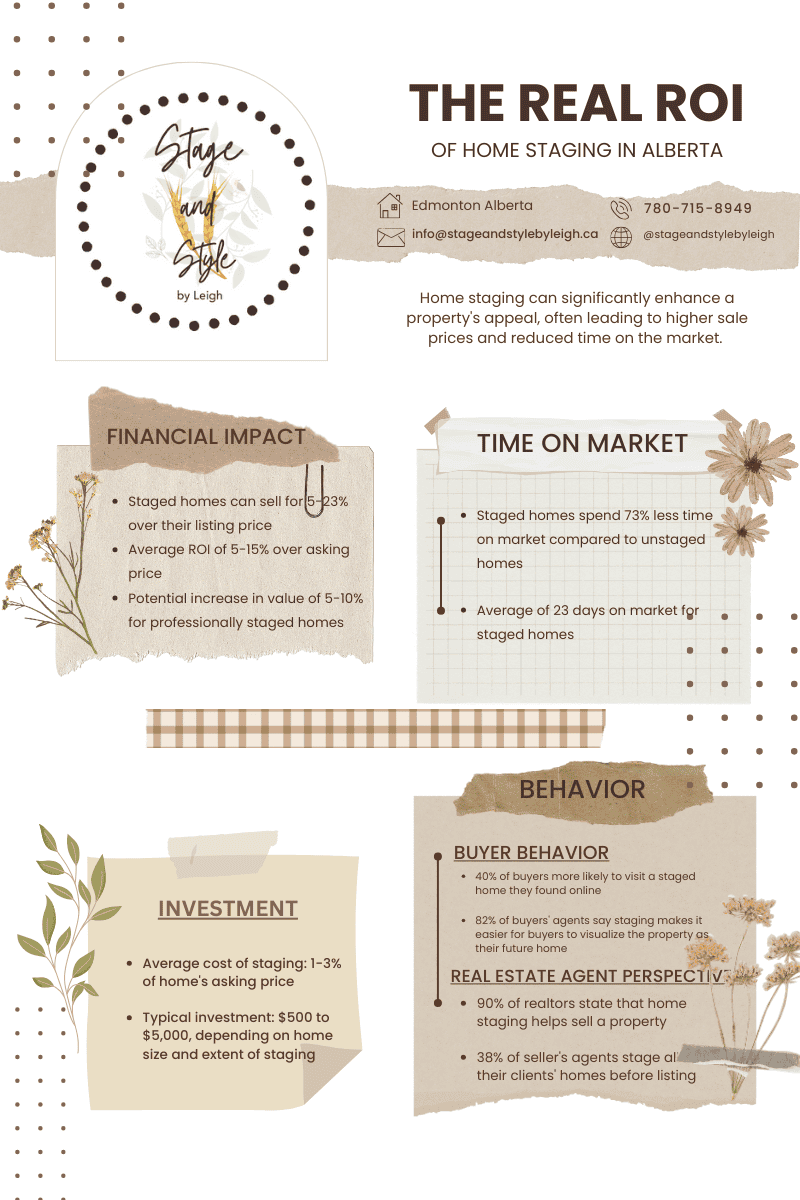
For sellers, home staging isn’t just about aesthetics—it’s a strategic investment. Studies reveal that staged homes:
- Spend 73% less time on the market than non-staged properties.
- Sell for an average of 6–10% above the asking price.
This return on investment highlights the psychological edge staging provides in a competitive market.

Final Thoughts: Why Home Staging Works
The decision to buy a home is deeply personal and emotional. Home staging leverages psychology to present a property in its best light, allowing buyers to form an instant connection. Strategic furniture placement transforms a house into a home. Harmonious color schemes and curated decor inspire buyers. They can’t resist imagining it as their own.
For sellers, this process increases marketability, shortens the sales timeline, and often boosts the final sale price. In today’s competitive real estate landscape, staging isn’t just an option—it’s a necessity.
Are you considering selling your home? Partner with a professional stager at Stage and Style by Leigh. Unlock your home’s full potential. Make an unforgettable first impression.